On Mark 6:30-44

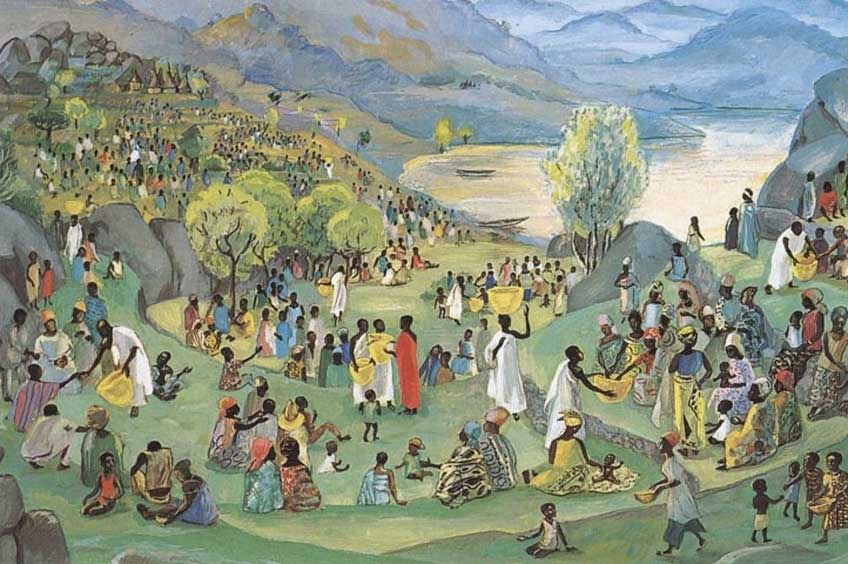
Wish I had more time on Sunday morning’s text, but here’s a picture of how Christ contrasts Herod. This happens in the context of Mark’s account of the feeding of 5,000 men in Mark 6.

“Jesus’ banquet for the rabble of Galilee foreshadows the messianic banquet and contrasts with the drunken debauchery of Herod’s feast for the high officials, captains, and the leading men of Galilee (Mark 6:22). Herod’s feast with its exotic fanfare and dancing girls, cannot ultimately satisfy human hunger. Herod serves up only death, with the head of John the Baptizer brought to him on a platter (6:28). His lackeys bind (6:28) and behead (6:17) others. Only the spread offered by Jesus in the desert can satisfy human needs. Jesus brings life-giving bread with an abundance of leftovers.”

-David E. Garland, The NIV Application Commentary on Mark, 254
Bénédicte de La Roncière

On 1 Corinthians 2:9

Every week, I hope to share with you a short article from a scholar (that is an “I hope so” kind of hope, though, so relax if you don’t see nothing on here some weeks) on something I did not have time to flesh out on Sunday. Although I strive for an exposition that is God-honoring, Christ-exalting, and Holy Spirit-led, there may be difficult texts or pearls that I didn’t get to share. I only get 35 minutes to preach, y’all. In other words, you can take this short article as a supplement during the week to the sermon preached on Sunday.

This week, we tackle 1 Corinthians 2:9 in which leading New Testament scholar Richard B. Hays will give us insight on.

For context, Paul is writing to the Corinthian church and he quotes a citation in verse 9. We are used to Paul quoting writers of the Old Testament. But to attribute this citation to an Old Testament writer is difficult because, although it comes close to Isaiah 64:4, it is not an exact parallel to it. The question then is, “Who does Paul quote?” Dr. Hays gives us some insight. Emphasis is mine.

 But, as it is written,
“What no eye has seen, nor ear heard,
    nor the heart of man imagined,
what God has prepared for those who love him”—

1 Corinthians 2:9 (ESV)

The Scripture quotation in 2:9, however, creates a number of puzzling problems, because it does not conform exactly to any known Old Testament text. There are two possible explanations for the source of the quotation: either Paul was referring to Isaiah 64:4 (with perhaps an echo of Isaiah 65:16) and quoting it very loosely from memory, or the quotation comes from an apocryphal source no longer extant. Several factors speak in favor of the Isaiah reference.

Paul elsewhere employs the citation formula “as it is written” exclusively for quotations that come from texts belonging to the subsequently formalized canon of Hebrew Scripture; it is unlikely, though not impossible, that he would use this formula to cite a Christian apocalypse otherwise unknown to us.

Secondly, Paul’s letters contain numerous allusions to Isaiah, particularly its later chapters, which he read as a prefiguration of God’s eschatological salvation of Gentiles along with Israel. An allusion to this section of Isaiah would fit the general context in 1 Corinthians 2 very well indeed. (Note, for instance, the fervent appeal “O that you would tear open the heavens and come down” in Isaiah 64:1 and the prophecy of “new heavens and a new earth” in 65:17.)

On the other hand, they are equally good reasons to think that the quotation comes from a lost source. The syntax of the quotation fits Paul’s sentence very awkwardly; if he were quoting Isaiah loosely from memory, he surely would have made the citation fit into his sentence better.

Secondly, Origen, writing in the third century C.E., identified this quotation as coming from the Apocalypse of Elijah, a text no longer extant.

Finally, a very similar quotation turns up in the Gospel of Thomas as a saying attributed to Jesus: “Jesus said: I shall give you what no eye has seen and no ear has head and no hand has touched and (what) has not entered the heart of man” (Gospel of Thomas 17). Thomas is a second-century text and therefore certainly not the source of Paul’s quotation, but it may bear witness independently to this tradition as coming from a source unrelated to Isaiah.

Whatever the source of the quotation, its sense is clear:

God’s way of bringing salvation to the world through the cross was hidden from all human understanding, but God “prepared” this plan before the foundation of the world for those who love him.
-Richard Hays, First Corinthians: Interpretation – A Bible Commentary for Teaching and Preaching, 44-45

Saturday Morning Prayer

“O God,
let something essential and joyful happen in me now,
something like the blooming of hope and faith,
like a grateful heart,
like a surge of awareness
of how precious each moment is,
that now, not next time,
now is the occasion
to take off my shoes,
to see every bush afire,
to lead and whirl together with neighbor,
to gulp the air as sweet wine
until I’ve drank enough
to dare to speak the tender word:
‘Thank you’;
‘I love you’;
‘You’re beautiful’;
‘Let’s live forever beginning now’;
And, ‘I’m a fool for Christ’s sake.’ “

-Ted Loder, Guerrillas of Grace

Saturday Morning Prayer

“O God, gather me
to be with you
as you are with me.
Keep me in touch with myself,
with my needs,
my angers,
my pains,
my corruptions,
that I may claim them as my own
rather than blame them on someone else.

O Lord, deepen my wounds
into wisdom;
shape my weaknesses
into compassion;
gentle my envy
into enjoyment,
my fear into trust,
my guilt into honesty.

O God, gather me
to be with you
as you are with me.”

-Ted Loder, Guerrillas of Grace

My Father and the Hope to See Him “Tomorrow.”

“I’ll see you tomorrow, son… I’ll see you tomorrow.” Those were the last words I heard from my father on Father’s Day yesterday. It was a rushed response to something I was telling him. I was being cut off because the doors were opening and he had to hang up the phone and go in. Those three words were full of hope, full of expectancy. In a way those words were said unconsciously. My father said them as if he had been dreaming for months of the day that he would see me, my siblings, and his grandchildren again. That was his goodbye. All I can do is wait for him to call again this week.

I don’t normally put out stuff like this online since I have a group of people I share all this with and who walk with me in this, but reflecting on my dad and his life, I decided to write a bit and share a little about him.

My father is Antonio Villatoro. He will be 65 years old in a few months. For now, he is in a detention center in Brackettville, Texas. It is a long story, but the short one is that he is awaiting his sentencing to serve time for illegal re-entry into the United States. Since last June, his sentencing has been postponed and reset twice. The lawyer says he doesn’t know why. Yes, my father broke the law. There is no question about that. He came illegally to this country from El Savador. But, it is way more complicated than that. My father lived in the U.S. since the early 1980s. He and my mother settled in the Southeast side of Houston, Tx., and I was born in 1985.

Dad with his kids, 1993

Dad with his kids, 1993

In the following 5 years, my three siblings were born and my parents did everything in their power to gives us the best. We didn’t go to Seaworld or Disney, but we had new bikes and new tennis shoes. I had school supplies and school uniforms. My parents gave us everything they thought we needed to be able to succeed in school. We used to devour books at a young age; Berenstain Bears (the children books and chapter books), The Boxcar Children book series, even R.L. Stine’s Gossebumps book series, and the list goes on. Education and good grades was important in our family and my parents did everything they could to empower us in that.  We lived our childhood with not much to be boastful about.

My dad worked as a bricklayer for 25 years. He started as a bricklayer’s helper and then became a sub-contractor. He laid brick all over the new homes that were popping up in Copperfield and Fairfield in the 1990s. Immigration raids were popular then, so he would tell us stories of how they would hide inside the new homes as ICE (Immigration and Customs Enforcement) raided the new subdivision they were working in. Time and time again, he would go to work fearing that he may get caught. As a child, I often wondered who else would work long hours for low pay to build these homes if my dad and his construction crew were caught. My siblings and I went to school as U.S. born citizens with full rights, but every time my father would get stopped by a cop for a burned out headlight or for going over 10 miles per hour over the speed limit, we would fear about what would happen to him. We would huddle up in the backseat and pray to the Jesus my parents taught us about.

My parents raised us in the church culture. They would teach us about God and instilled in us good values. My father was  greeter of the year once, another year he won the award for giving the most Bible Studies that year, he even wanted to plant a church in Cleveland, Tx. These are all stories I wish I had time to write down and share with everyone. My dad was a good man.

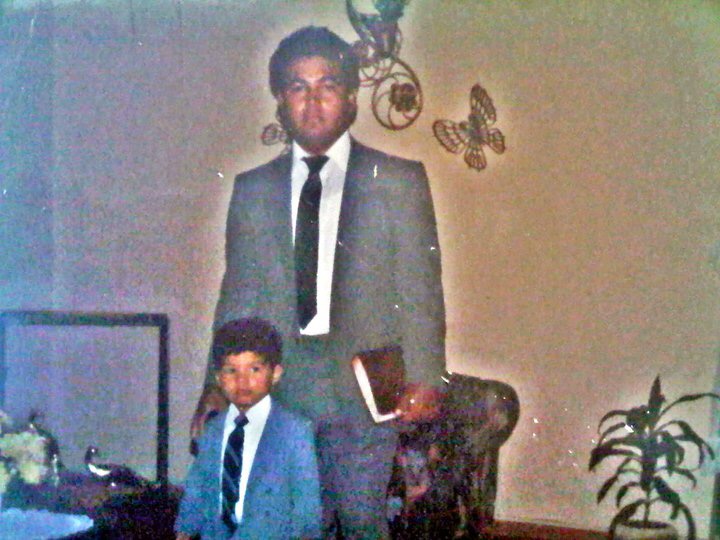
Dad holding his Bible, and me, going to a church service

Dad holding his Bible, and me, going to a church service

Often, I would see him at home in the evenings after a hard day at work, leaning in to his Thompson reference Bible or Scofield reference Bible, reading the notes on a particular passage of Scripture. Imagine a man trying to figure out tough theological views when he had only gone to school for less than a year of his life (and I don’t mean college).

In the early 2000s, my father was disillusioned with life and we witness his downfall. It was the darkest moments of our lives. He gave in to alcohol and he did not abide by the law. One day he ran a red light and the police finally caught him. He served time and was deported to El Salvador. That was his punishment. No physical contact with his children, no seeing our weddings and graduation ceremonies. No seeing and holding his grandchildren. On and on and on. We must accept that. There are consequences for bad actions. But, we believe that enough time has passed.

My father has tried twice to re-enter this country illegally since then. There is no way (to our knowledge) that he could enter legally. The system gives a limited amount of visas to people from El Salvador and my father has a record of being here illegally. Twice, he has served more than 9 months in prison because he has tried to come back to us, his children. We’ve grieved as we’ve celebrated some events in the lives of my siblings and I. Not a week passes by when we don’t wish for our dad to experience life with us. A Caldo de Res at Taqueria Cancun on Gessner Rd., a coffee at some Starbucks, a walk in the park talking about life and stuff. Those are the things we pray for. Although, grief has come into our lives for the past few years, we stay firm in God’s will and are encouraged by the fact that God is in control of what He is doing and He sees us through suffering.

When my dad calls from jail, he usually dismisses himself telling me that he loves me and tells me to care for my wife. But tonight, in a sudden movement of the prison doors being opened, he had a split second to dismiss himself and just said what he has been praying for for a very long time, “I’ll see you tomorrow, son… I’ll see you tomorrow.” I so hope that would be true.

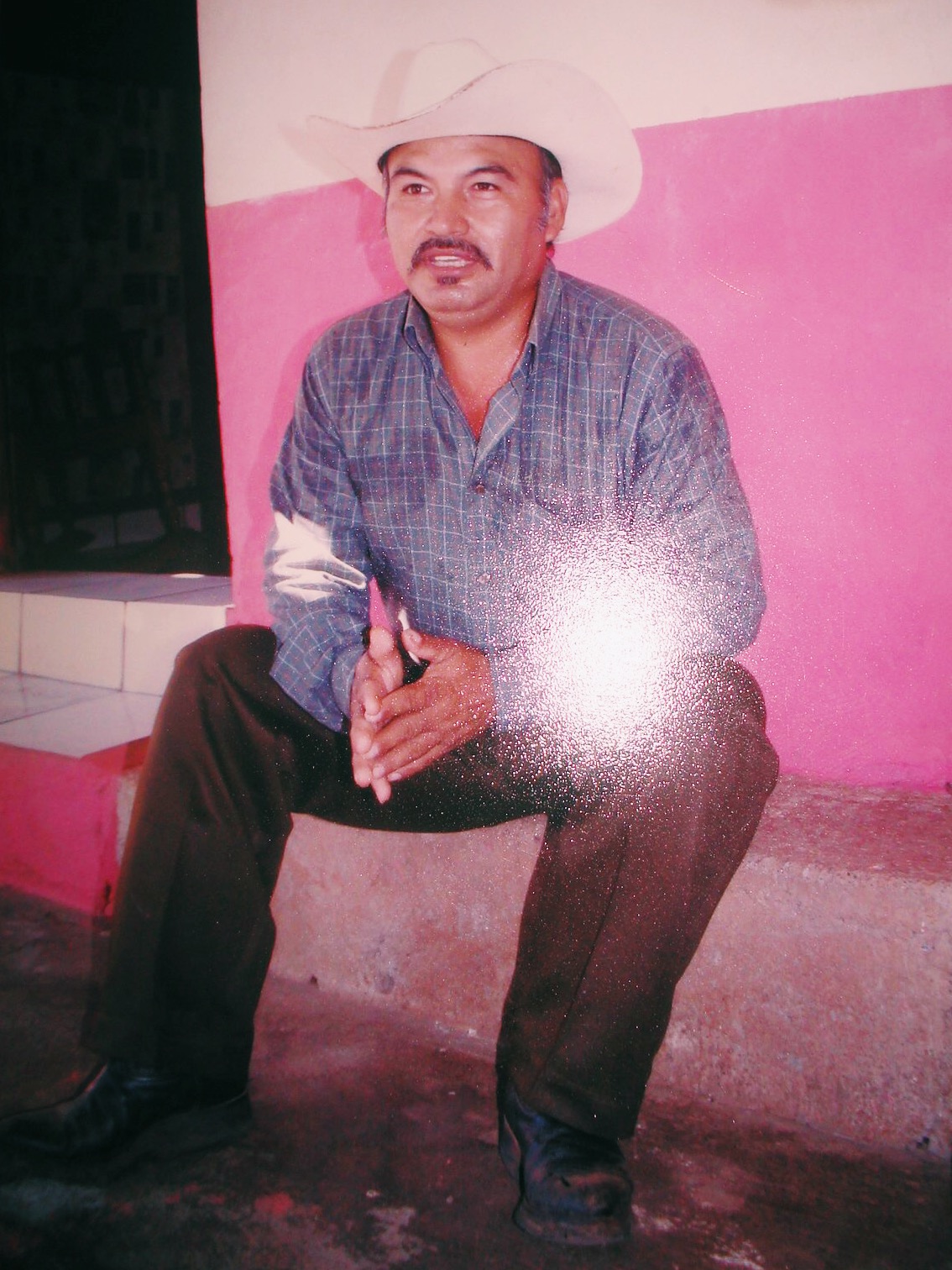
Dad in El Salvador, 2009

Dad in El Salvador, 2009

DANGER: Putting Our Experiences in the Place of Christ

Jonathan Edwards

Jonathan Edwards, pastor-theologian (1703-1758)

“What they are principally taken and elevated with, is not the glory of God, or beauty of Christ, but the beauty of their experiences.

They keep thinking with themselves, ‘What a good experience is this! What a great discovery is this! What wonderful things have I met with!’

And so they put their experiences in the place of Christ, and his beauty and fullness; and instead of rejoicing in Christ Jesus, they rejoice in their admirable experiences: instead of feeding and feasting their souls in the view of what is without them, viz. the innate, sweet, refreshing amiableness of the things exhibited in the gospel, their eyes are off from these things, or at least they view them only as it were sideways; but the object that fixes their contemplation, is their experience; and they are feeding their souls, and feasting a selfish principle with a view of their discoveries: they take more comfort in their discoveries than in Christ discovered.” -Jonathan Edwards

-Kyle Strobel, Formed for the Glory of God: Learning from the Spiritual Practices of Jonathan Edwards, pg. 138

Easing into Church Traditions

Christianity Was Here Before Me
Christianity did not start with me or with my parents or with the churches that exist today. The church has existed for hundreds and hundreds of years. When I planted a church in 2010, I remember coming into the community of Spring Branch knowing that there were churches already there and had been there for at least 150 years. Christians have started to believe that if it does not look fresh and new, we feel like if people will not get the message of the gospel. I think we have done a disservice to the simplest message there is. We must keep in mind that there have been believers before us who have laid a foundation and maybe even planted the seed of the good news. We mess up when we don’t just water the garden with love, care and good news. Christianity, for sure, did not start with me.

A Church Tradition Without “Tradition”
Because I grew up in a church tradition with no “tradition,” I was never exposed to the church calendar. Things like Advent, Lent, and other days that should have been remembered were often forgotten. Well, Pentecost Sunday was always remembered. My parents raised us pentecostal, after all. That is not to say that pentecostals don’t practice the church calendar, but the stream of pentecostalism that I grew up in did not. Looking back at the years that have gone by and seeing the rich church history there is, I know I am part, a little part, of something big, something huge. Christians after Christians after churches after churches have gone before me and any other church that will be planted by a team of believers or by anyone else must recognize this. The danger of being a church that despises, or at the very least forgets, church history and church tradition is that it results in pride and legalism. Pride, because “we have all the answers.” Legalism, because “you must do it our way.”

Man-Made Traditions vs. God-Glorifying Traditions
Of course, there are traditions that are bad and human-made. They get weird and mystical. Paul writes about these human traditions. See Colossians 2:8. But, to use verses like that and argue against church traditions that have gone on for centuries is incorrect. When Paul talks about tradition and speaks negatively about them, he is pointing out the philosophy and deceit that comes from man-made ideas, traditions that do not arise from Biblical implications. These traditions that Paul talks negatively about are different than the practices (which became tradition) that the church started to do in her early years; practices that have become tradition, are rooted in Scripture and give glory to God.

A Passionate and Exciting Spiritual Walk
In my spiritual walk, I have been learning a lot the past few years. Recognizing that I am not the only Christian or that our church is not the only church with “the answer,” but that I am part of a larger body of Christian believers, I have come to appreciate tradition. Some say that “tradition” kills the spirit. To them, the spirit is a force and not God Himself. That is an error. If you believe that the spirit is God, any tradition, ritual or spiritual discipline that you do for His glory will not “kill Him.” Killing the spirit does not equate “grieving the Spirit.” We must note that we grieve the spirit of God only when we sin, not when we practice a spiritual discipline such as reading a devotional to draw us closer to Him. As “dry” as some may think that the practice of reading a written prayer is, those prayers written by Christians who’ve lived before us do honor God. As “boring” as some may think that being silent in prayer before God is, it is in those silent moments that God speaks. We must learn to stop talking for a bit and start listening to Him. Yes, He is a giver of things, but when we recognize that He has given us enough already, His Son, all we can do and should do is stay silent before Him much more than blab out our list of needs. What has been sold as dry and boring spirituality is actually a passionate and exciting way to live out our spiritual disciplines.

Joyful Discoveries
It has been a few years that my wife and I started taking note of the church calendar. Discovering Advent season was huge for our marriage. Time to slow down, read Scripture and pray as we waited for the arrival of Christ as a baby was refreshing for us. We also discovered and embraced the practice of Sabbath. Although not always done “perfectly” (thank God for His grace!), my wife and I would turn off all distractions and spend time together in God’s word, cook good food, bake a cake, read fiction, smoke a cigar (that was all me) and rested. We still do this on Fridays. These practices, these times of waiting and rest, have brought us closer to Christ and have filled our hearts and home with joy.

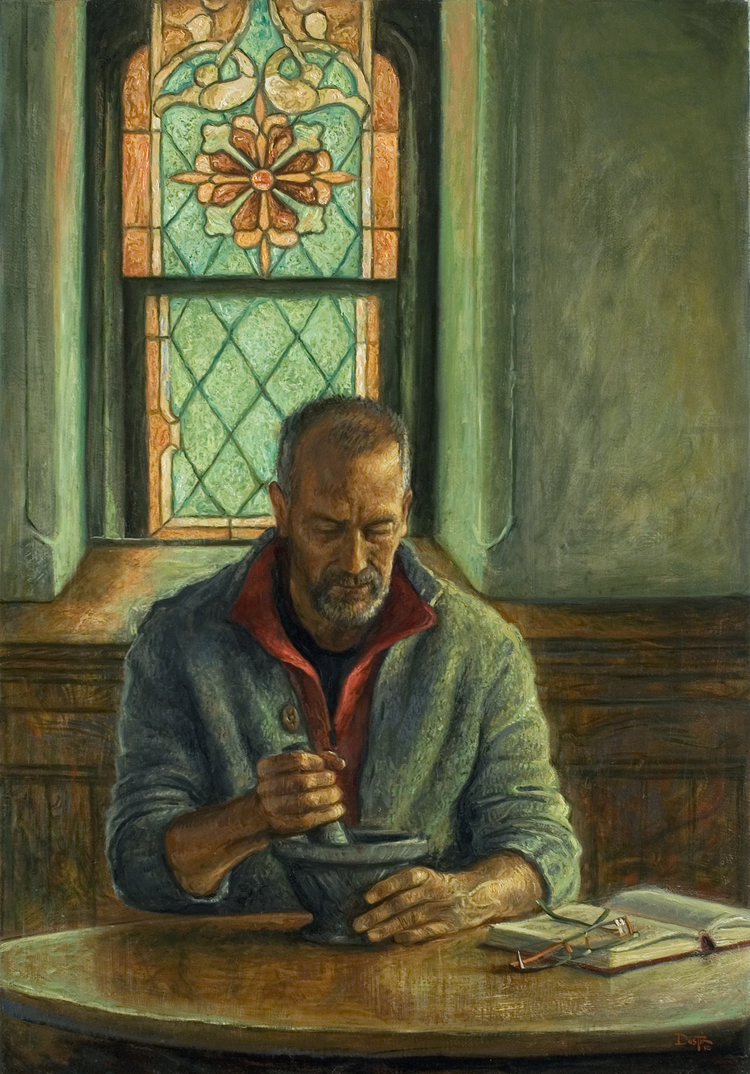
Ash Wednesday by Dustin Neece

Ash Wednesday by Dustin Neece

Last year we embraced Lent season. In a few days, I will let you know of what we are doing as a family. Lent is a season of forty days that happen every year as Christians remember Christ’s death and resurrection. Lent was practiced by the early Christians as early as the fourth century. This season is a time where we remember that we are dust and that we are sinful. Lent is a time where we reflect on Christ and His cross. It is a season where we ask Christ to keep us near. Of course, Christians do this every day of the year, but Lent is a time where the Church as a whole strives to give it first importance. In these forty days, people are encouraged to fast from food and abstain from things that may distract them or keep them from focusing on repentance and on drawing near to Christ. More than giving up stuff and saying the same usual “I’m giving up lent for lent” joke, Lent transcends our petty consumerism and sometimes prideful fasting and takes us to a deeper union with Christ. Oh, how beautiful it is there. Whether you “do well” this Lent season or get frustrated because you did not, make sure that you stay close to Christ. There is no judgement from Him. He embraces you and me, faults and all.

As you can tell, our family is slowly easing into the traditions that Christians have practiced throughout the centuries. Not because there is something magical and mystical in them, but because there is something, actually a lot, to be said of things that have stood the test of time.

A People Who Listen, Rest and Leave a Legacy
My hope is that one day the church, at least our church plant and other churches in the city, could be a people who listen to others, who learn how to rest in God and who live quiet lives, leaving a legacy for our children and children’s children. It starts with bringing the rhythms that believers have done for hundreds of years into our lives. It starts with slowly easing into something that is stable and fruitful. It starts with me actually doing it. There’s lots of rest to be had if people join in.

Here are a few resources you could read on Lent:

Meet HCPN Resident: Justin Moore

Justin and Becky“Cypress Community Church desires to help everyday people follow Jesus in the everyday. We accomplish this through our natural rhythms as we go into our neighborhoods, schools, and workplaces with a clear desire to bring the gospel message to those who do not know Jesus. We desire to invite people into our communities and rhythms of our lives.”

We continue meeting the Houston Church Planting Network Residents. Today, Justin Moore tells us a little bit about himself and what he envisions his church plant to be like in Cypress. In my time of getting to know Justin, I have witnessed him to be a man who empowers others for the work of the ministry. Keeping it simple always with the goal of being missional, I am looking forward to seeing Jesus’ disciples all over Cypress due to Cypress Community Church and other churches who have that end in mind. Meet Justin.

1. Tell me a little bit about yourself…

“I have served on several church staffs over the last 12 years in both Houston and Austin, TX. I have also spent the last year preparing to plant Cypress Community Church in a paid church planting residency through the Houston Church Planting Network. My wife, Becky, and I have been married for 14 years and love serving the local church together. Becky works as a special education teacher in the Cy-Fair school district. We have two children: Emily (7) and Caden (4). Cypress Community Church believes that people’s time should be free to be used as missionaries in their zip code. We are very excited to see a new church planted in Cypress that will help people follow Jesus in every aspect of their busy lives.”

2. What is your family’s favorite local restaurant?

“Our family doesn’t eat out a lot, but when we do, we love any kind of Mexican food.”

3. What books are you currently reading?

“-The Tangible Kingdom by Hugh Halter
-The art of Neighboring by Dave Runyon”

4. What do you do in your time of rest?

“We spend most of our free time with our two kids and hosting our friends and neighbors in our home. We love to Barbecue!”

5. Where would be your family’s dream vacation destination?

“Anywhere on the beach! We love Playa Del Carmen, Mexico!”

6. Where in Houston do you desire to plant a church?

“We will be planting in Cypress, TX., along the 290 corridor.”

7. Why Cypress?

“There are over 6.1 million people in the greater Houston area with over 700,000 living in or around the Cypress area. There are currently about 150,000 people living in a five mile radius of 290 and Barker Cypress with an expected 20% growth rate over the next 5 years. The Cypress-Fairbanks school district currently has over 116,000 students enrolled with plans to open 12 new campuses by the year 2020 to accommodate growth. It is expected that more than 17,000 new housing units will be developed in the next five years in the Cypress-Fairbanks district.

The bottom line is, our churches cannot keep up with the growth in our area of the city. We need more churches.

‘The vigorous, continual planting of new congregations is the single most crucial strategy for the numerical growth of the Body of Christ in any city…’ –Tim Keller

Cypress Community Church not only dreams of planting itself in the city, but seeing more Gospel-Centered communities planted all over the greater Houston area to see our city transformed with the Gospel of Jesus.”

8. What is your vision for your particular church plant?

“Cypress Community Church desires to help everyday people follow Jesus in the everyday. We accomplish this through our natural rhythms as we go into our neighborhoods, schools, and workplaces with a clear desire to bring the gospel message to those who do not know Jesus. We desire to invite people into our communities and rhythms of our lives.”

9. How can we pray for you?

Prayer is what powers the ministry of any church. Please join us in prayer as we being this new work. Pray for Cypress and the greater Houston area so that the Gospel would be planted in our city.”

Folks, contact Justin through any of the ways below with your prayers, encouragement, and any information you’d like to know about his church plant…

Email: Justin@cypresscommunity.org
Mail: Cypress Community Church,
PO Box 2875,
Cypress, TX 77410

More Blog Posts on this Series:

Meet HCPN Resident: Jacob Sweeney

Jacob and Whitney
“We hope to see the kindness of God renew Timbergrove one person at a time through relational discipleship.”
We continue meeting the Houston Church Planting Network Residents. Today, Jacob Sweeney tells us a little bit about himself and what he envisions his church plant to be like in Houston. Over the months, I’ve been blessed with insights he has dished out during our Cohort Days and I have witnessed a sense of God’s calling on him. He doesn’t mention it on the interview, but he is a thoughtful preacher who handles the Bible text well. Check out his sermons on his website: www.jacobsweeney.org. The brother can preach! Meet Jacob.

1. Tell me a little bit about yourself…

“I was born in Houston but grew up outside Detroit, the second of three kids, and the first in my family (on either side) to be called to vocational ministry. The Lord called me to ministry while on a summer retreat with my youth group in West Virginia. I was sixteen years old. After high school I attended the Moody Bible Institute in Chicago. It was there that I met my wife, Whitney. We married after graduation and made our first home in Houston. Two months after our wedding I found myself unexpectedly out of a job. This would be the catalyst for us to leave family, friends, and a church we loved to move 1,000 miles to Louisville, KY. There we would spend three years at the Southern Baptist Theological Seminary where I earned a Master of Divinity. While we were there, we always wanted to move back to Houston. Eventually we would be connected with a church in the Heights, which we joined a year ago after moving back to Houston.”

2. What is your family’s favorite local restaurant?

“We love Mexican food. If we could we would only eat it every day. Our favorite is La Hacienda. They have a location here in the Heights and one in Cypress.”

3. What books are you currently reading?

“Oh, man… too many. I tend to bounce around. Here are the last five books I have read:

– The Divine Conspiracy Dallas Willard
– The Lord of the Rings J.R.R. Tolkien
– Eat This Book Eugene Peterson
– Excellence in Preaching Simon Vibert
– Preaching to a Post-Everything World Zack Eswine”

4. Who is your favorite dead and alive theologian?

“Dead: Augustine. He was a brilliant theologian and powerful preacher.

Living: It’s a tie – Eugene Peterson and Eric Johnson. Dr. Johnson was my counseling professor at Southern Seminary. He is a brilliant theologian and as well as a balanced and compassionate counselor. His classes made me a better man.”

5. What do you do in your time of rest?

“I love to read, run, and play with Noah. Time with Whitney is my favorite (especially if I can get her to laugh!).”

6. Where would be your family’s dream vacation destination?

“Anywhere in Europe, especially Italy or Austria. Whitney has never been and I would love to take her through the UK and Western Europe one day.”

7. Tell me a little bit about your ministry experience…

“I have held a number of ministry positions since high school. The Lord has blessed me with opportunities to serve as an Associate Pastor, a Pastoral Assistant, small group leader, Chaplain, and, now, a church planter. I’ve served in Youth ministries, mentoring, and outreaches to male prostitutes. I also helped to start a worship ministry and a preaching mentoring program.”

8. Where in Houston do you desire to plant a church?

“Currently, we are looking to plant in the Timbergrove area of Houston. It is a neighborhood that has experienced tremendous change over the last few years, with an increasing population density, and a complete lack of churches.”

9. Why Houston? (when there are so many churches here)

“For me, it has always been Houston. As a kid growing up in SE Michigan I was always proud to tell people that I was from Houston. My heart has always been in this city. During our three years in Louisville, few days ever went by that I didn’t pray for the Lord to bring us back. Beyond that, it is experiencing tremendous growth as men, women, and children flock here by the thousands each week from all over the world. That makes it a strategic city. We have an opportunity to reach the world with the gospel through this one city.”

10. What is your vision for your particular church plant?

“We hope to see the kindness of God renew Timbergrove one person at a time through relational discipleship.”

11. How can we pray for you?

“Three things:

1. People – pray that the Lord builds our core team through committed, godly, servant-hearted men and women who believe in the vision.
2. Place – pray that the Lord continues to clarify the direction he seems to be leading us.
3. Provision – pray that the Lord moves many families to support our ministry financially.”

Folks, contact Jacob through any of the ways below with your prayers, encouragement, and any information you’d like to know about his church plant…

Email: jacob.sweeney@gmail.com

Twitter: @jsweeney27

More Blog Posts on this Series:

Meet HCPN Resident: Taylor Ince

Taylor and RobinWe want to see Westheimer become a bridge between North and South rather than a barrier.”

This week, I want you to meet the Houston Church Planting Network Residents. Today, Taylor Ince tells us a little bit about himself and what he envisions his church plant to be like in Houston. I admire this brother. We call him The Doctor since he is the only one in the group with a PhD. Above all, he is a fun guy who I have gained insight over the past 5 months. Meet Taylor.

1. Tell me a little bit about yourself…

“I am a 6th generation Houstonian. I have 5 kids: 2 in Heaven, 3 on Earth. I have a Bachelor’s in History from Wake Forest College, a Divinity degree from Reformed Theological Seminary, and a PhD in Hebrew and Old Testament studies from New College, University of Edinburgh.”

2. What is your family’s favorite local restaurant?

“Lupe Tortilla. Because we have a 2-year old and a 4-year old, I am a bit ashamed to say that we spend an inordinate amount of time at Chick-Fil-a.”

3. What books are you currently reading?

Job Through New Eyes by Sumpter,
Prayer by Keller,
A New Testament Biblical Theology by Beale,
Holiness by Ryle,
On the Trinity by Richard of St. Victor,
Teaching a Stone to Talk by Dillard,
Emotionally Healthy Church Planter by Scazerro,
Young Stalin by Montefiore,
Hitler by Kershaw,
John Calvin by Selderhuis,
Center Church by Keller,
The Church Planter by Patrick,
The End of the Beginning by Dumbrell,
Hard Scrabble by Graves,
Horace’s Odes,
Virgil’s Georgics.

4. Who is your favorite dead and alive theologian?

“Dead: Moses
Alive: Tim Keller”

5. What do you do in your time of rest?

“Read, walk, smoke my pipe, pray, spend time with family, cycle, and climb rocks.”

6. Where would be your family’s dream vacation destination?

“Maui. My wife has lots of family there, so the dream is reality, my friends… glorious!”

7. Tell me a little bit about your ministry experience…

“Not much. I had the pleasure of getting to know some Muslim university students in Edinburgh quite well, and that was a huge blessing. We learned a lot and came to love them as some of our dearest friends. We carried our heart for Muslims back to Texas and want outreach to Muslims to be a hallmark of our ministry in Houston.”

8. Where in Houston do you desire to plant a church?

“We will be planting in the Galleria area close to a big Islamic education centre; which is good thing.”

9. Why Houston?

“There are lots of people who are still wandering in darkness and headed to hell. There are lots of non-Christians who think they are Christians and lots of Christians who need discipling. Plus, I’m from Houston and love Houston and God has called us to plant here. We spend tons of resources trying to reach the nations abroad while we could spend much less with greater effectiveness reaching the nations here in Houston… And they are here, more than any other city in the Nation.”

10. What is your vision for your particular church plant?

“Isaiah 61:4
1. Proclaim (herald the gospel and win the lost),
2. Plow (disciple),
3. Plant (life together through parish group multiplication; plant churches that plant churches),
4. Propel (strategic ministry partnerships) to see Westheimer become a bridge between North and South rather than a barrier; to kill abortion in my lifetime and to win Muslims to Christ.”

11. How can we pray for you?

“You have enough info above. Please, just pray! Okay, pray for humility and prayerfulness.”

Folks, contact Taylor through any of the ways below with your prayers, encouragement, and any information you’d like to know about his church plant… 

Phone: 281.624.7680;
Email: taylorince@gmail.com
Twitter: @taylorhadenince

More Blog Posts on this Series: